The Ultimate Guide to Gaming Collaborations
At a time when gaining new fans or users for any entertainment product becomes harder every year, brand collaborations have become one of the most popular ways to gain a new following. But adapting an iconic intellectual property (IP) into an established world is one of the toughest creative challenges developers face even though it yields some of the greatest benefits. Fans expect authenticity for the characters, but the universe they enter demands coherence. It’s not hard to receive initial excitement in brand collabs, but retention requires a seamless blending of worlds that truly enriches the material. We faced, and overcame, this familiar challenge while trying to adapt the Teenage Mutant Ninja Turtles (TMNT) into RAID: Shadow Legends.
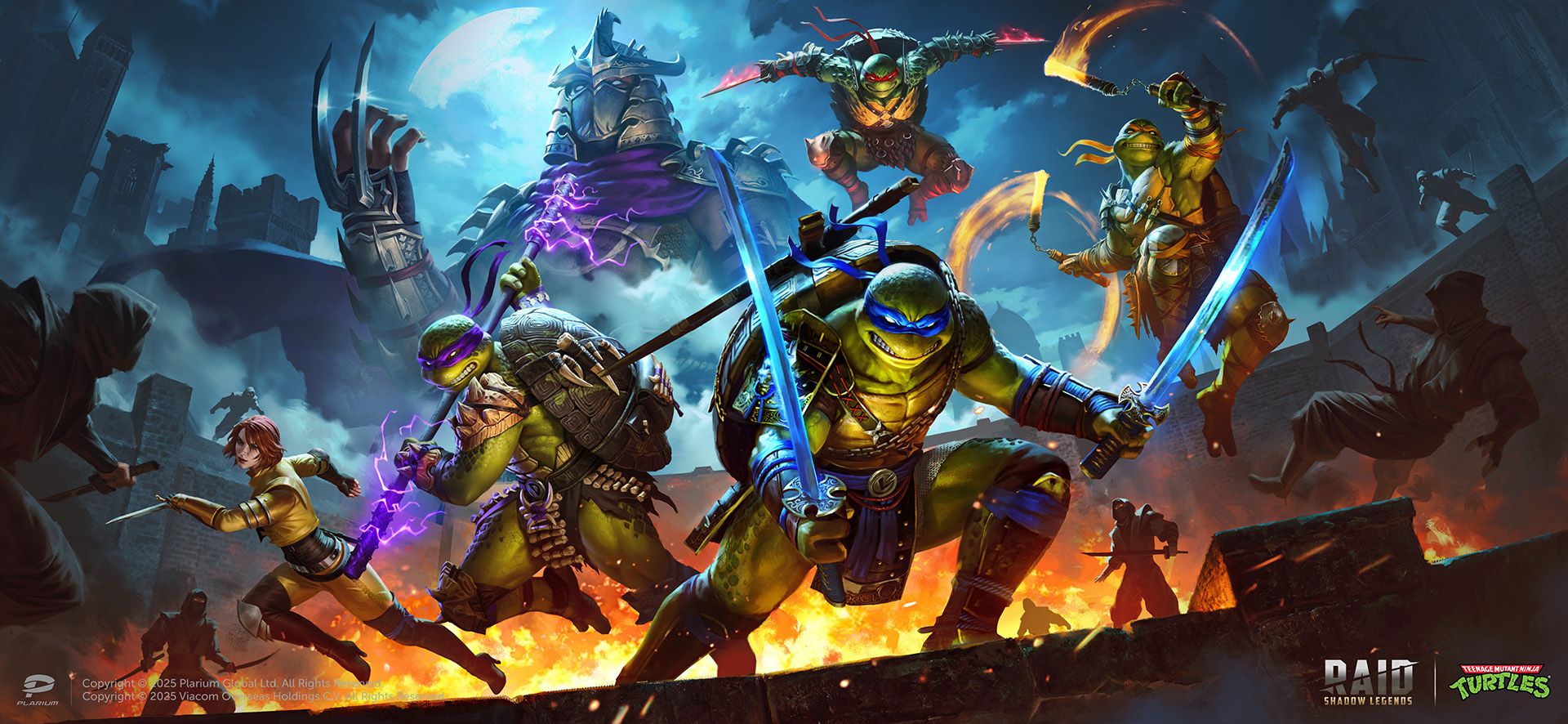
Preserving Identity While Blending Worlds
When our team set out to bring Leonardo, Donatello, Raphael, Michelangelo, April O’Neil and Shredder into RAID’s dark, realistic fantasy universe, we immediately recognized the challenge. The Turtles themselves carry a powerful cultural identity: distinct silhouettes, colors, weapons, and personalities. Players had to recognize them instantly but also believe that they truly belonged in RAID’s lore-driven, dark fantasy-inspired world.
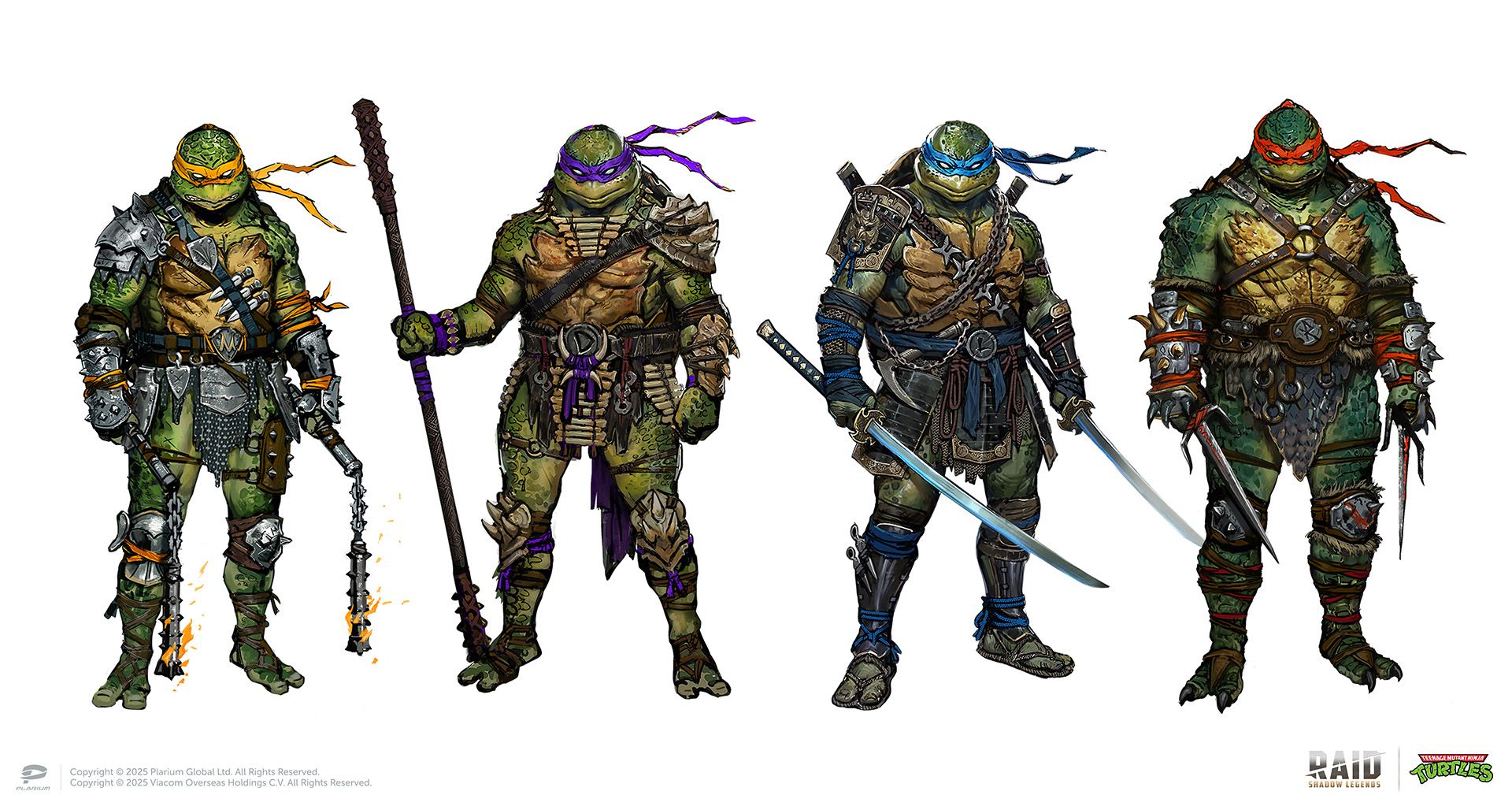
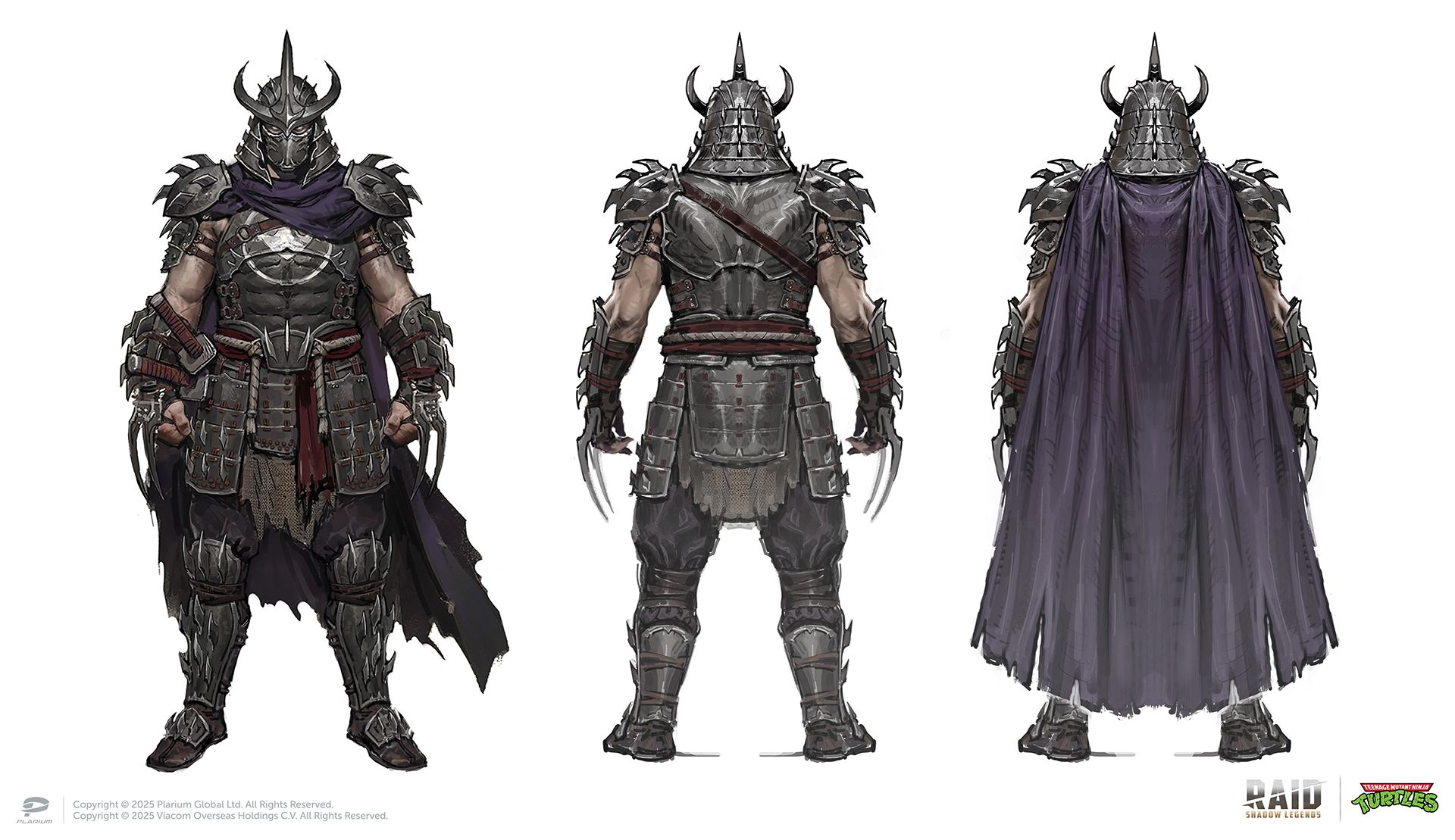
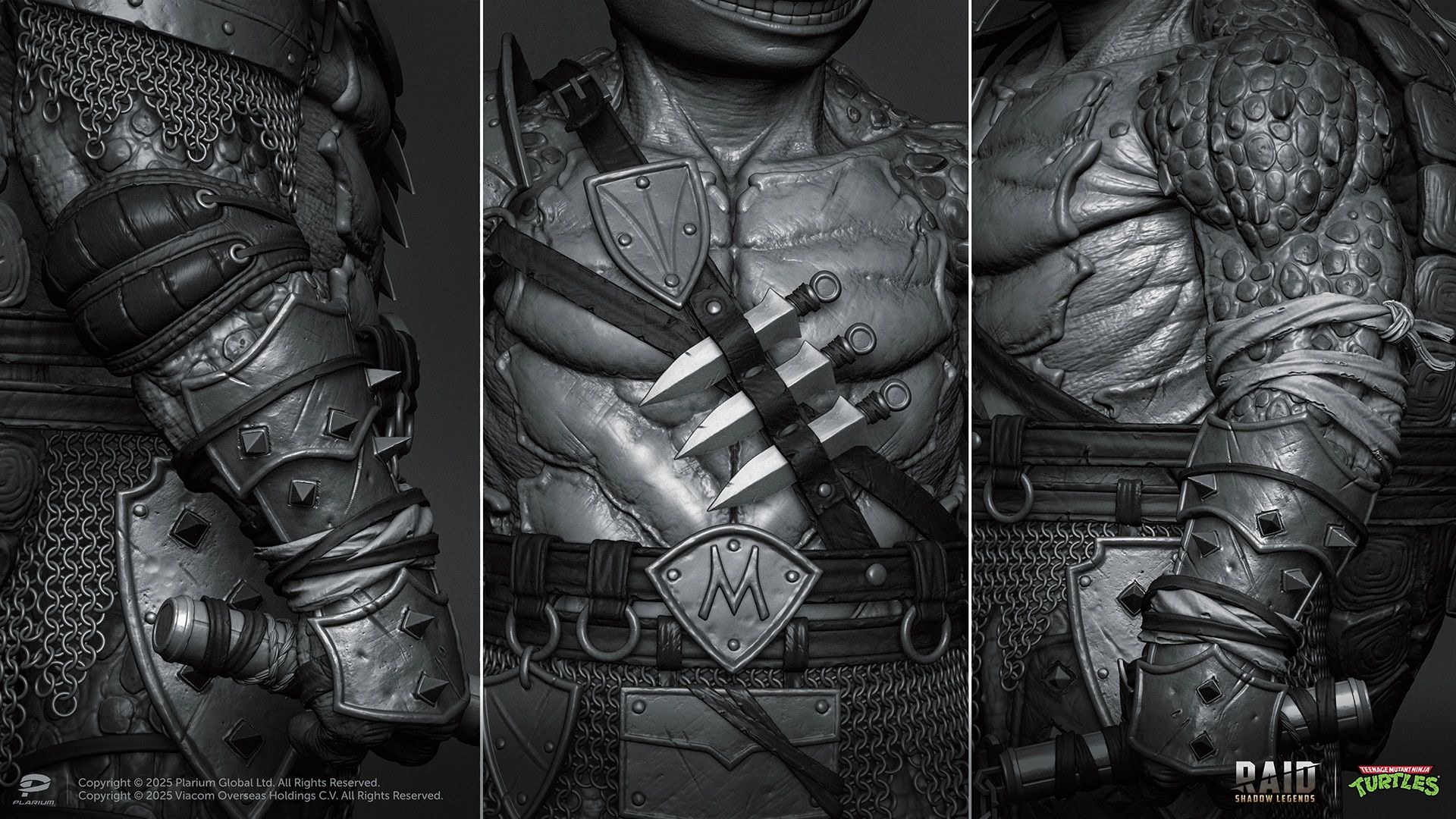
The solution was to retain the core essence of the characters with their ninja vibe, signature weapons, and group dynamic, while carefully adjusting their look and feel to blend with our style. Armor, anatomical realism, and medieval textures gave them weight in RAID’s fantasy setting without losing their original charm. It was also important to play up the stark contrast between the sarcastic, playful nature of TMNT with the serious demeanor of RAID’s most iconic Champions. This was accentuated in the launch trailer with Michelangelo and the well-known Champion Galek interacting with humorous effect.
Visual and Narrative Adaptation
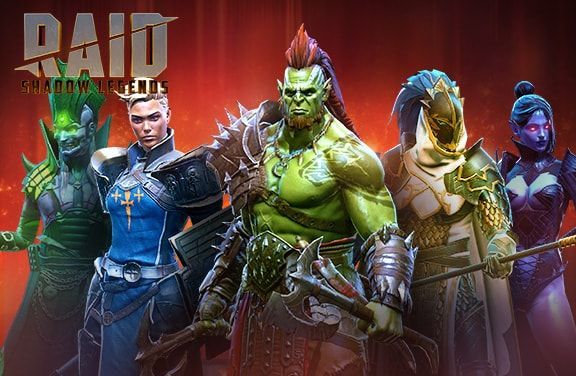
One of the first steps in creating a good collaboration is understanding how to naturally fit the core identity of characters from the incoming IP into your own property. In the case of TMNT, we placed each of the Turtles, as well as April O’Neil and Shredder, into one of RAID’s Factions, reimagining each hero with a new role. Factions are how RAID: Shadow Legends categorizes the 900+ champions that players collect and plays a critical role in gameplay and lore.
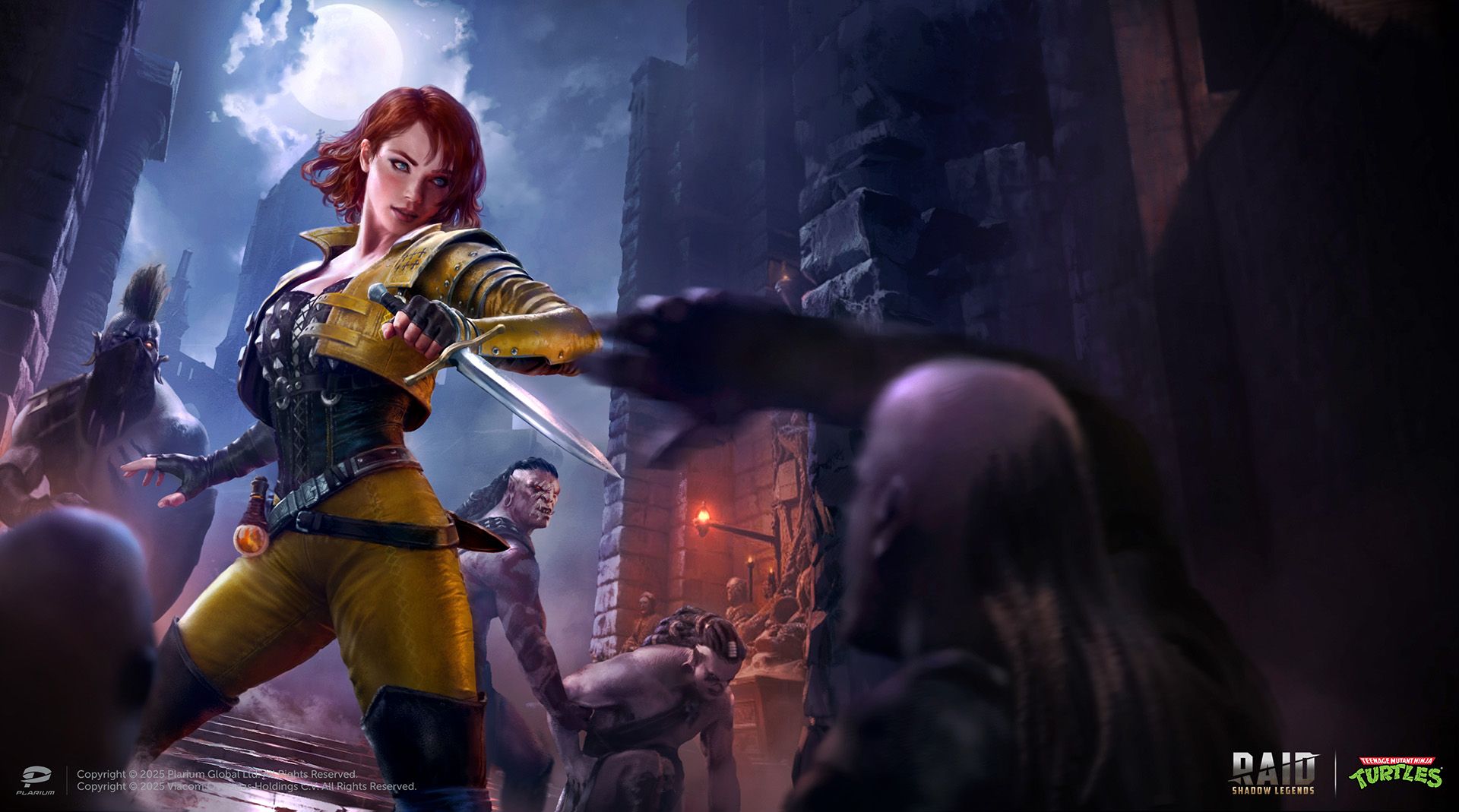
Leonardo became a disciplined samurai-ninja aligned with the Shadowkin. Donatello took on a primal, reptilian design inspired by the Lizardmen. Raphael was reshaped as a fierce Barbarian warrior. Michelangelo adopted a knightly, Banner Lord aesthetic. April was envisioned as a stalwart ally from the Sacred Order, and the nefarious Shredder is a powerful warlord within the Shadowkin. These choices balanced familiarity with fresh interpretation, allowing players to see their favorites in new contexts.
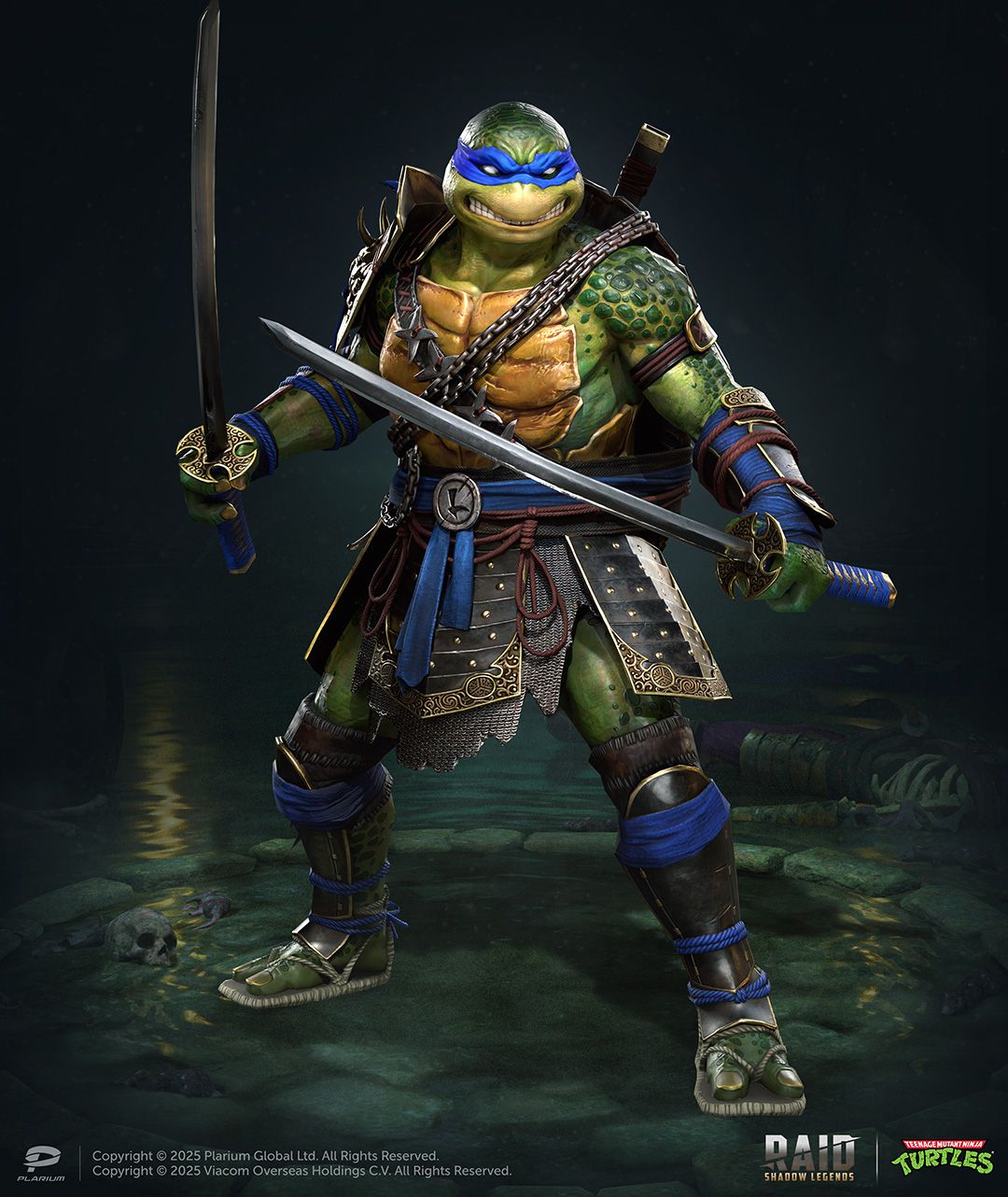
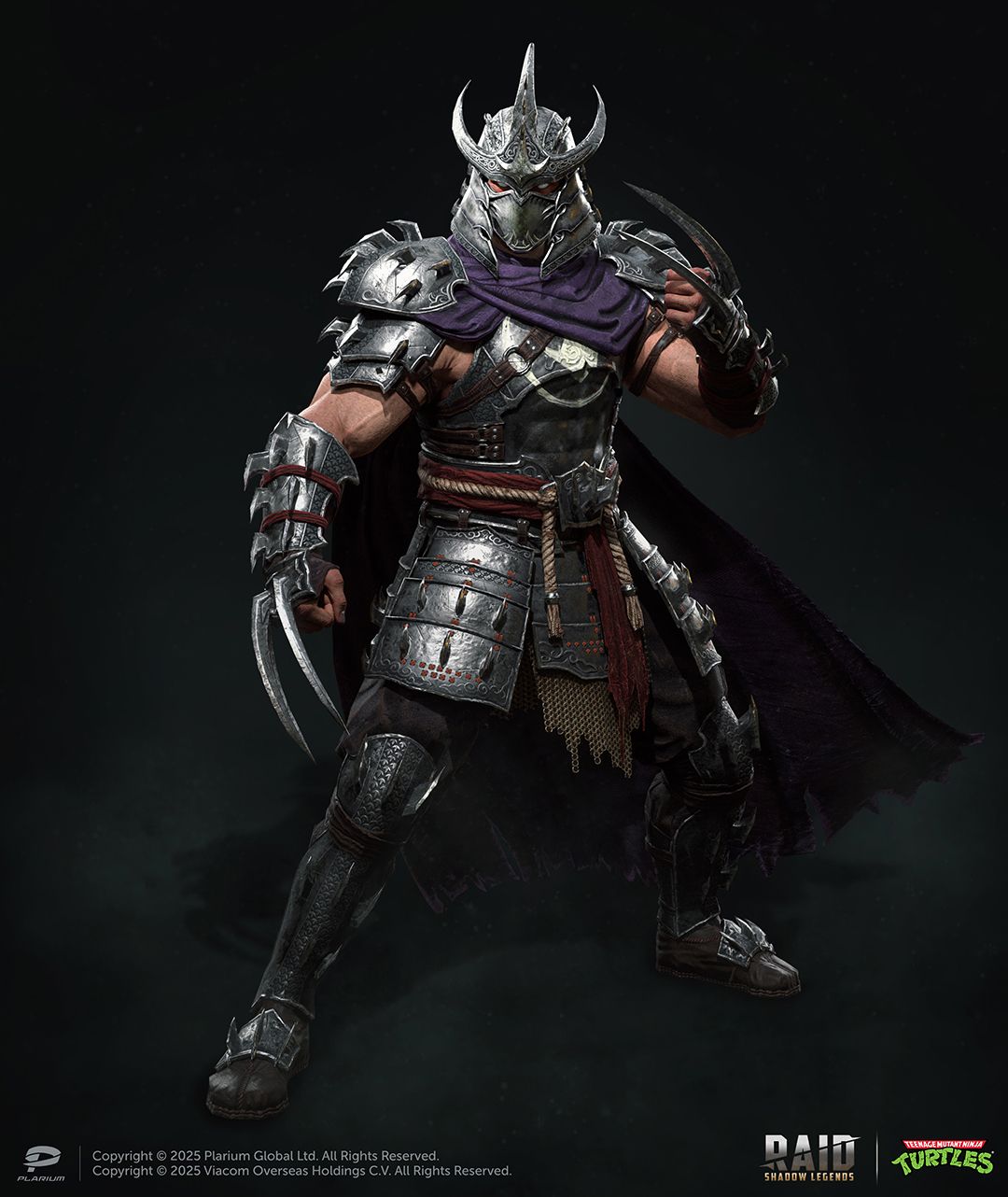
Weapons were another crucial touchstone. Seeing as RAID is a role-playing game (RPG) with deep customization, we had to make each of their weapons and skills work within our battle system. The katana, bo staff, sai, and nunchaku were adapted to RAID’s mechanics but preserved their speed, rhythm, and personality-driven dynamics. Combat animations were designed to feel both authentic to the characters and seamlessly integrated with the battle system.
Behind the Creative Process
The adaptation went through multiple iterations of concept art before the team found the right balance between cartoon legacy and fantasy realism. Anatomy, armor textures, and shell detailing grounded the characters, while vibrant colors and iconic gear ensured instant recognition.
To push the designs further, the team used narrative explorations as a creative tool. We imagined Master Splinter sending the Turtles on different missions and trials, challenges that would force them to grow stronger as individuals while remaining united as a team. Donatello, for instance, was reinterpreted without his usual gadgets. In Teleria’s dark fantasy setting, he had to rely solely on knowledge and experience, with only his electrified bo staff hinting at his technical side. Small narrative exercises like this helped shape both the look of each Turtle, as well as how their character would resonate in RAID’s world.
This was a cross-disciplinary effort among concept and 3D artists as well as animators. Concept artists shaped the initial vision, animators infused motion and personality, and 3D artists gave life to musculature, armor, and expression. Tech artists designed effects that amplified each hero’s unique abilities. The environment team even built a custom showcase scene inspired by sewer hideouts, bridging RAID’s world with TMNT’s iconic origin story.

Collaboration also extended beyond the studio. Representatives from Paramount were deeply involved, weighing in on each design to ensure the characters stayed true to their spirit while adapting naturally to RAID. Creative debates like, ‘Do we push their design toward realism or keep it more stylized?’ pushed the team to a “golden middle” that worked for both worlds. Sometimes it feels like leveraging existing characters is easier than creating original ones, but the level of minutia involved in translating IPs balances out that perceived advantage.
Takeaways for Creators
For creators tasked with adapting well-known IPs into their own universes, this recent project of ours highlights several key strategies:
1. Respect the core identity.
The first priority is to preserve the fundamental elements that make the characters recognizable and beloved. This often means protecting key features such as silhouettes, iconic weapons, and signature personalities. These elements act as anchor points for fans, ensuring that no matter how much the design evolves to fit a new world, the characters still feel instantly familiar. Stray too far from these identifiers, and the adaptation risks losing the connection to the source material.
2. Adapt, don’t overwrite.
Bringing a character into a new setting requires careful translation rather than replacement. In the case of RAID, this meant reinterpreting textures, armor, and lore in a way that fit within a dark fantasy world while keeping the Turtles’ essence intact. For creators, this balance is about respecting the DNA of the original IP while reshaping its outer shell to blend seamlessly with the host universe.
3. Engage the IP holder early.
Working with an external IP is always a partnership, and success depends on maintaining an open channel of communication with the rights holder. Early engagement provides clarity on creative boundaries, streamlines approvals, and ensures the adaptation remains authentic to the original while allowing for creative growth. This relationship can also help creators avoid costly reworks later in production by aligning expectations from the start.
4. Reward the fans.
One of the most effective ways to enhance familiarity and deepen engagement is through subtle nods and easter eggs that resonate with fans of the original IP. These details—whether a visual gag, an animation flourish, or a background reference—signal respect for the legacy of the characters and offer something special for those who look closely. For creators, these hidden touches show that the adaptation was made by people who share the same passion as the audience.
Even the most iconic IPs can feel at home in unfamiliar worlds. Careful collaboration, creative mindfulness, and attention to fan expectations can transform a high-risk business move into a rewarding opportunity. Brand collaborations may grow more essential as audiences become harder to reach, but when handled with authenticity and craft, they offer creators not just a way to attract new fans, but also enrich their own universes in ways that feel both fresh and ultimately, inevitable.